
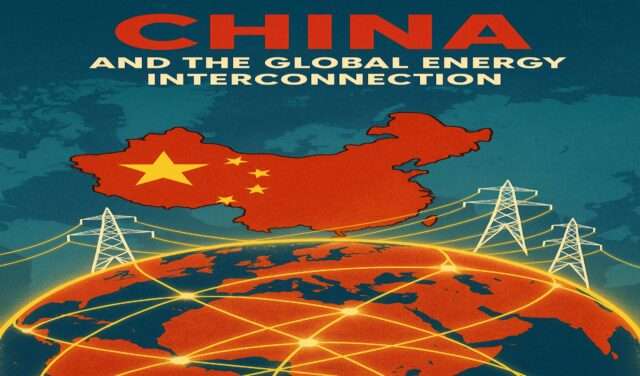
Executive Summary This report investigates China’s proposal for a Global Energy Interconnection (GEI), an eighteen-line ultra-high voltage (UHV) network linking over 80 countries with renewable energy and smart-grid infrastructure. The project represents a major geopolitical development with profound implications for the global energy governance. The initiative, although rooted in the language of sustainability and economic cooperation, extends Beijing’s strategic influence across Asia and Africa, challenging the prevailing Western-led energy and political order. While the proposal highlights China’s commitment to renewable energy, evidenced by its wind and solar capacity, now surpassing thermal power for the first time, it also raises concerns over political dependency, infrastructure sovereignty, and global technological alignment. United States’ recalibration in foreign policy and global leadership under President Donald Trump could further facilitate China’s energy diplomacy, allowing the GEI narrative to acquire traction across the Global South. However, despite its promise, the GEI faces complex geopolitical resistance, substantial technical challenges, and uncertain international consensus. Key Takeaways China ’ s Global Energy Interconnection initiative strengthens its geopolitical presence in the Global South by combining sustainable development with strategic infrastructure outreach. The project presents significant strategic concerns for Western nations, particularly regarding technological dependence, energy sovereignty, and global standards. US
Read More
Analysing China’s Global Energy Interconnection – SpecialEurasia
Analysing China’s Global Energy Interconnection – SpecialEurasia