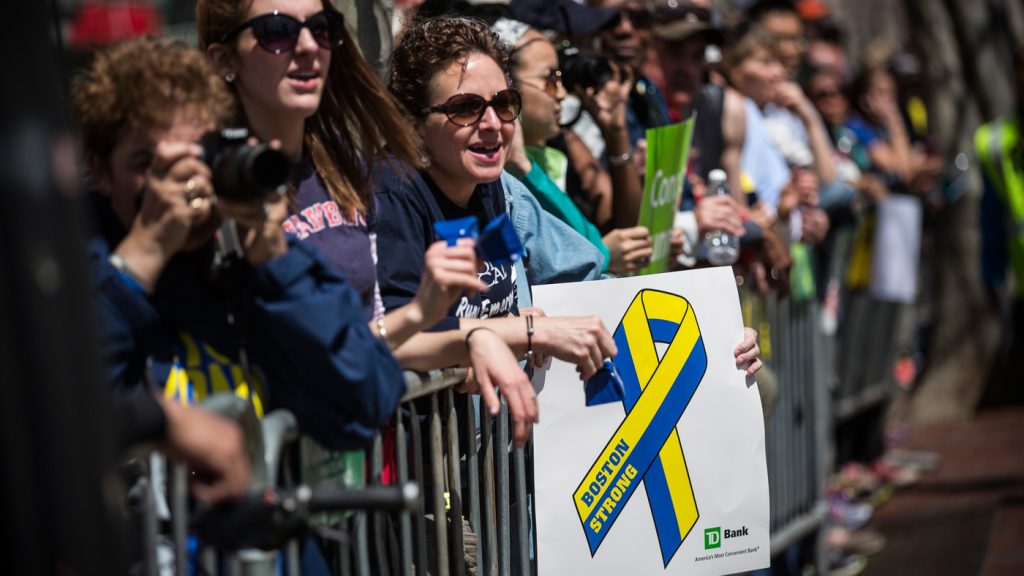
Fans with a “Boston Strong” poster cheer on runners as they finish the Boston Marathon in April 2014. Andrew Burton/Getty Images hide caption toggle caption Andrew Burton/Getty Images Fans with a “Boston Strong” poster cheer on runners as they finish the Boston Marathon in April 2014. Andrew Burton/Getty Images On April 15, 2013, two improvised bombs exploded near the finish line of the Boston Marathon. Emergency workers scrambled to treat over 200 injured runners and fans. Law enforcement agencies launched a manhunt for the perpetrators. And Americans, glued to their phone and television screens, watched for hours, waiting for the confusion and chaos to unfurl into a narrative. That act of watching — aided by new platforms, fueled by faster reporting — ushered in a new age of national response to local emergencies. The Boston Marathon bombings left an enduring framework for how Americans process, organize and mourn in the face of tragedy. Twitter solidified its status as the new public square When Dan Lampariello saw smoke pouring over Copley Square, an instinct kicked in. “I pulled out my phone and started taking pictures,” said Lampariello, a local television reporter who was a journalism student at Suffolk University at the
Read More
How the Boston Marathon bombings changed Twitter, media and how we process tragedy