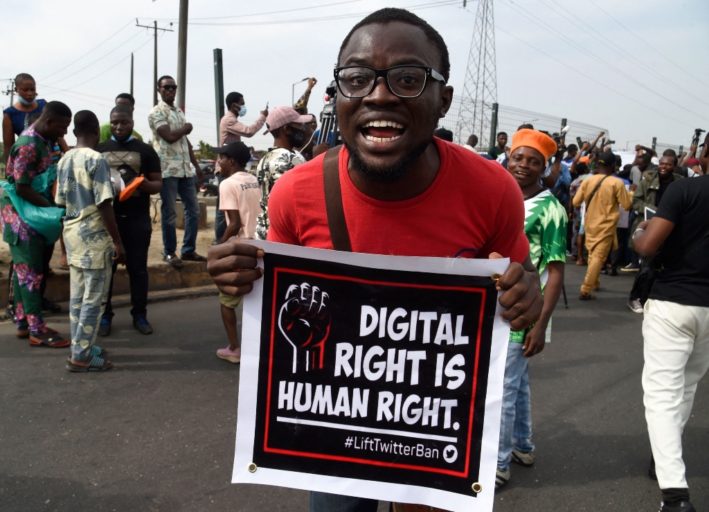
In Nigeria, a country that once sought to be Africa’s tech hub, many residents can no longer access Twitter. The government has blocked the popular social media platform since June 5, not long after Twitter enforced its content policies against President Muhammadu Buhari’s account. This extraordinary series of events showcases Nigeria’s dangerous shift toward digital repression, mirroring a global trend in which governments have restricted social media to maintain political control. The move may also be a harbinger of retaliatory restrictions on platforms around the world, as international tech companies begin to enforce their terms of service more stringently against leading politicians and politicians, in turn, seek to exert pressure on platforms. The Nigerian blocking appears to have been precipitated by Twitter’s content moderation. On June 2, the platform deleted a post from Buhari’s account and suspended the account for 12 hours. Twitter stated that the post, in which Buhari seemed to threaten violence against members of a secessionist movement in southeastern Nigeria, violated the platform’s policy on abusive behavior. (Facebook also deleted a post from Buhari’s account with the same language, reportedly after contacting the president’s office to ask that the post be edited). Days later, leading Nigerian internet…
Read More
Nigeria's Twitter Ban Is a Bellwether Case for Internet Freedom