
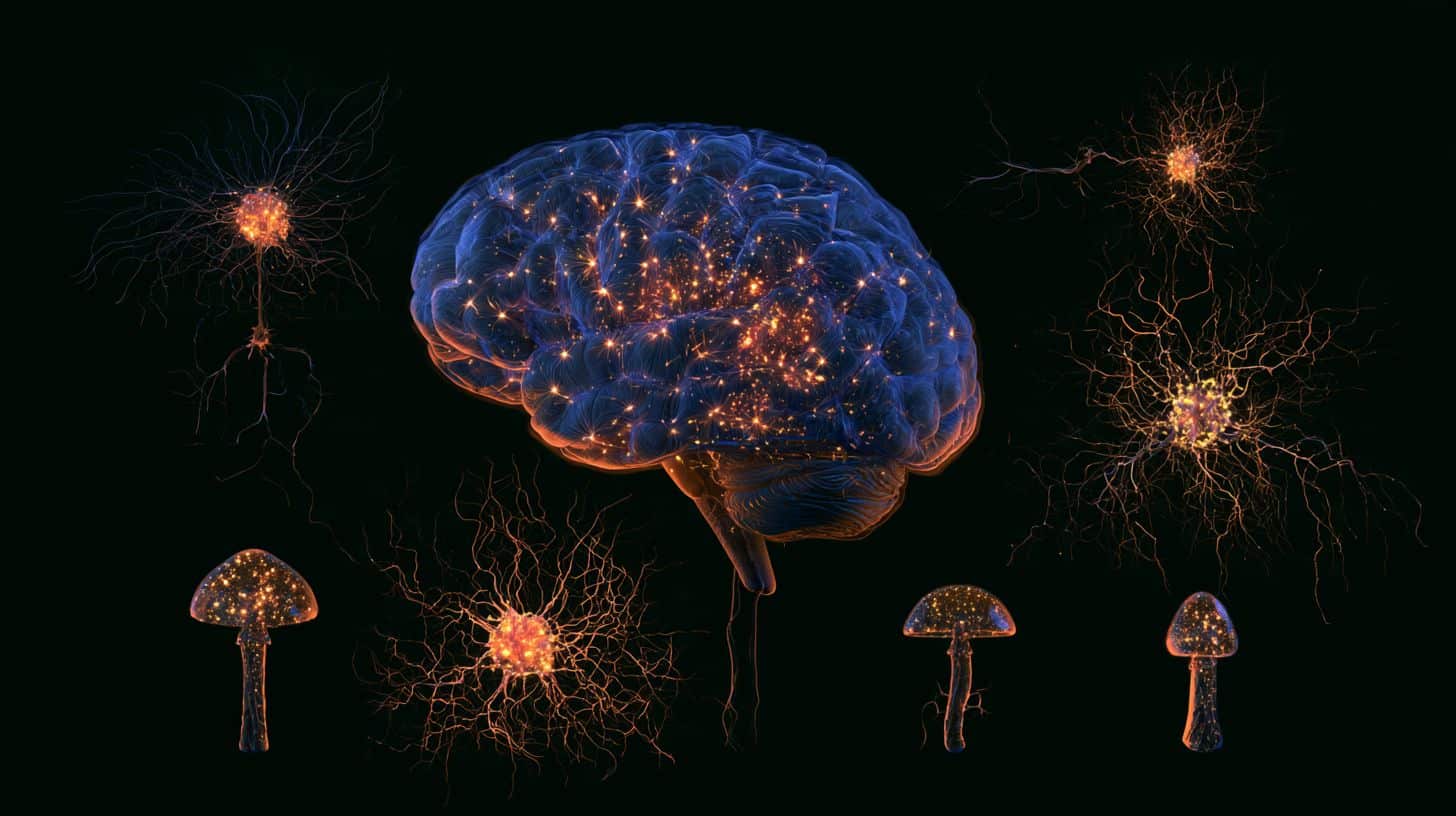
Summary: A neuroimaging and genetic investigation led by researchers at the University of California, Santa Cruz, reveals precisely how psilocybin restructures neural connectivity in living brains. Publishing in Nature Neuroscience, the team demonstrated that psilocybin drives the rapid growth and maturation of dendritic spines, remodeling cortical circuits based on whether the brain is healthy or damaged by chronic stress. Crucially, the researchers established a double dissociation in Layer 5 cortical pyramidal neurons, proving that psilocybin’s structural neuroplasticity operates independently from its hallucinogenic effects. Key Facts: Accelerated Synaptic Maturation: Two-photon microscopic imaging revealed that psilocybin sparks a rapid surge in new dendritic spines within 24 hours, driving their transition from fragile “stubby” protrusions into stable, receptor-dense “mushroom” spines that persist for weeks. State-Dependent Remodeling: In healthy brains, psilocybin selectively pruned older connections to maintain circuit balance; in chronically stressed brains characterized by synaptic decay, it induced an even greater burst of new spines while blocking excessive synapse loss. Separating Plasticity From the “Trip”: Genetic manipulation of serotonin 2A (5-HT2A) receptors in Layer 5 pyramidal neurons confirmed that structural synaptic plasticity can be fully achieved without triggering the head-twitch response, the biological proxy for psychedelic hallucinations. Source: University of California, Santa Cruz
Read More
Psilocybin Replaces Lost Synapses in Depressed Brains – Neuroscience News
Psilocybin Replaces Lost Synapses in Depressed Brains – Neuroscience News