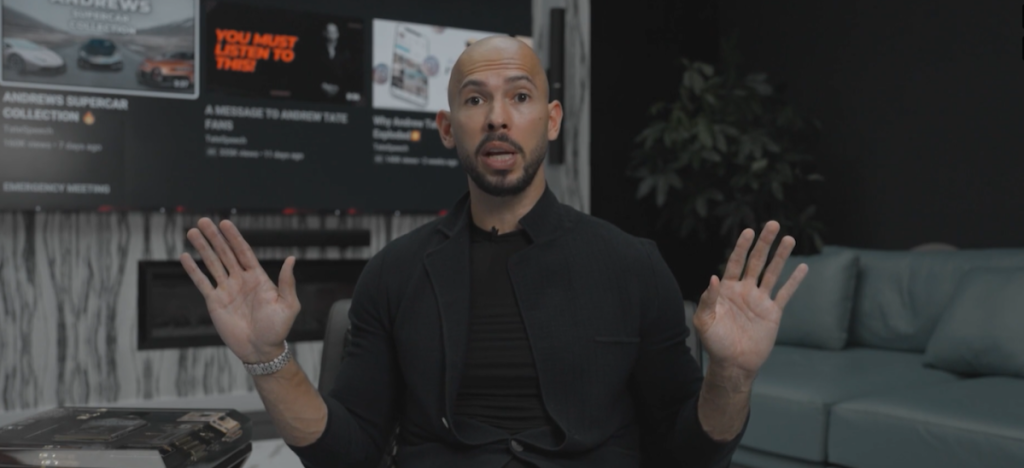
Andrew Tate’s use of social media might make his messaging sound novel, but in reality, it is the same anti-woman rhetoric of past misogynists. (Vimeo/FreeTopG)If you don’t recognize the name Andrew Tate, you have (luckily) avoided one of the most significant waves of misogyny on mainstream social media in recent memory.Tate, a pseudo right-wing influencer who espouses deep misogyny, rocketed to fame (and infamy) thanks to clever manipulation of social media algorithms — especially TikTok. Many articles have been written about Tate’s rise to fame and subsequent banning on social media.However, most articles fail to acknowledge that the only thing new or innovative about Tate and his rhetoric was his ability to leverage platform algorithms. Tate’s example highlights how proponents of misogyny are using new technology to amplify their messaging. And while his content is not new, his tactics present an important site of innovation and inquiry.Andrew Tate in the history of misogynyAndrew Tate got famous fast. In July 2022 Google searches for Tate exceeded Donald Trump and Kim Kardashian combined. Over a short period, he was transported from marginal fame to social media stardom.Banned from Twitter in 2017 (for anti #MeToo tweets, among other things), Tate surged into mainstream…
Read More
Social media misogyny: The new way Andrew Tate brought us the same old hate