
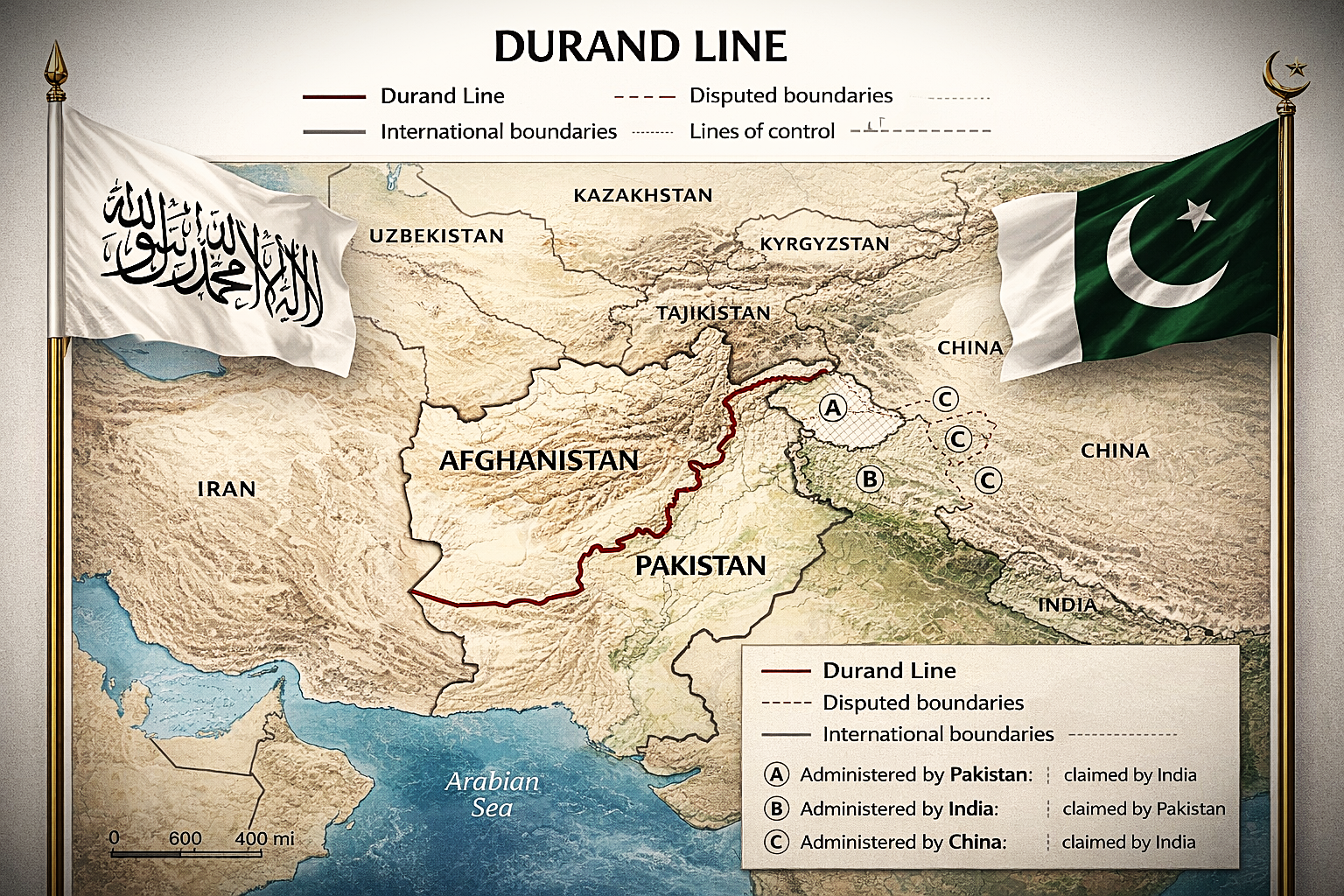
Executive Summary On 7 March 2026, the Taliban Defence Minister, during a Pashto-language engagement with ToloNews, identified theDurand Lineas a primary friction point in Afghan-Pakistani relations. The Minister acknowledged a formal Pakistani proposal for the definitive recognition of the Line as an international border. Given the protracted territorial dispute and escalating frontier skirmishes, this report evaluates whether a diplomatic resolution would mitigate regional volatility or inadvertently catalyse local insurgencies by further fragmenting the Pashtun ethnic core. Key Points The Durand Line remains one of South Asia’s most enduring territorial disputes; its legal ambiguity serves as a significant strategic lever for Kabul against Islamabad. The creation of an official border between Pakistan and Afghanistan may successfully represent a milestone in a de-escalation policy for both countries. Pashtun populations risk another fragmentation of their tribal customs and the end of their ‘Pashtunistan’ nationalist project. Background Information On 7 March 2026,Mawlawi Mohammad Yaqoob, the Minister of Defence of the Islamic Emirate of Afghanistan, accentuated how the Durand Line still represents a major element of tension between Afghanistan and Pakistan. He further emphasised Pakistan’s worries about this matter and admitted that Islamabad had proposed to officially recognise the Durand Line as the international boundary
Read More
Why the Durand Line Matters: Towards an AfPak De-Escalation? – SpecialEurasia
Why the Durand Line Matters: Towards an AfPak De-Escalation? – SpecialEurasia