
Sometimes, a tiny spark is enough to set evolution in motion. An international team led by Juan Carlos De la Concepcion, Nicholas Irwin and Yasin Dagdas at the GMI – Gregor Mendel Institute of Molecular Plant Biology of the Austrian Academy of Sciences (OeAW) discovered that subtle electrostatic changes can cause an ancient plant protein to break free from its original complex and take on new functions. An Ancient Protein and A Major Puzzle Cells operate like finely tuned machines: countless proteins interact in tightly coordinated systems. Many of these proteins are organized into fixed complexes – like gears in a clockwork. Such subunits are usually considered highly constrained in their evolution, as changes to one component could disrupt the entire system. All the more surprising, then, is the case of the protein Exo70. It is part of the so-called eight-subunit exocyst complex, which is found in all eukaryotes – including animals, fungi, and humans – and is responsible for secretory processes within the cell. Despite its tight integration in this complex, Exo70 has multiplied and diversified dramatically over the course of plant evolution. In Arabidopsis thaliana (thale cress), the model organism of plant biology, for instance, more than 20
Read More
Plant Power: Electrical Forces Bring Ancient Plant Proteins Back to Life
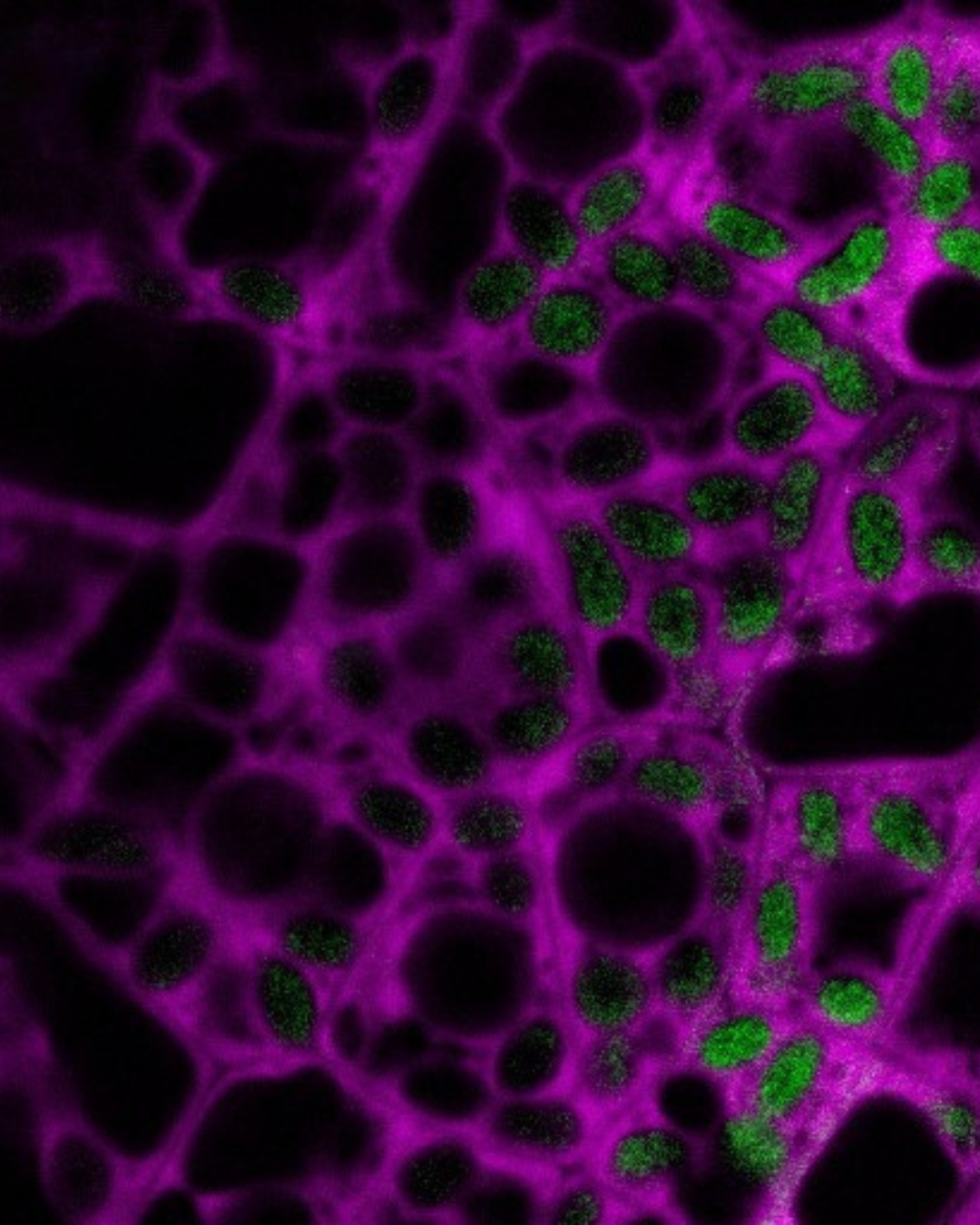
Plant Power: Electrical Forces Bring Ancient Plant Proteins Back to Life