
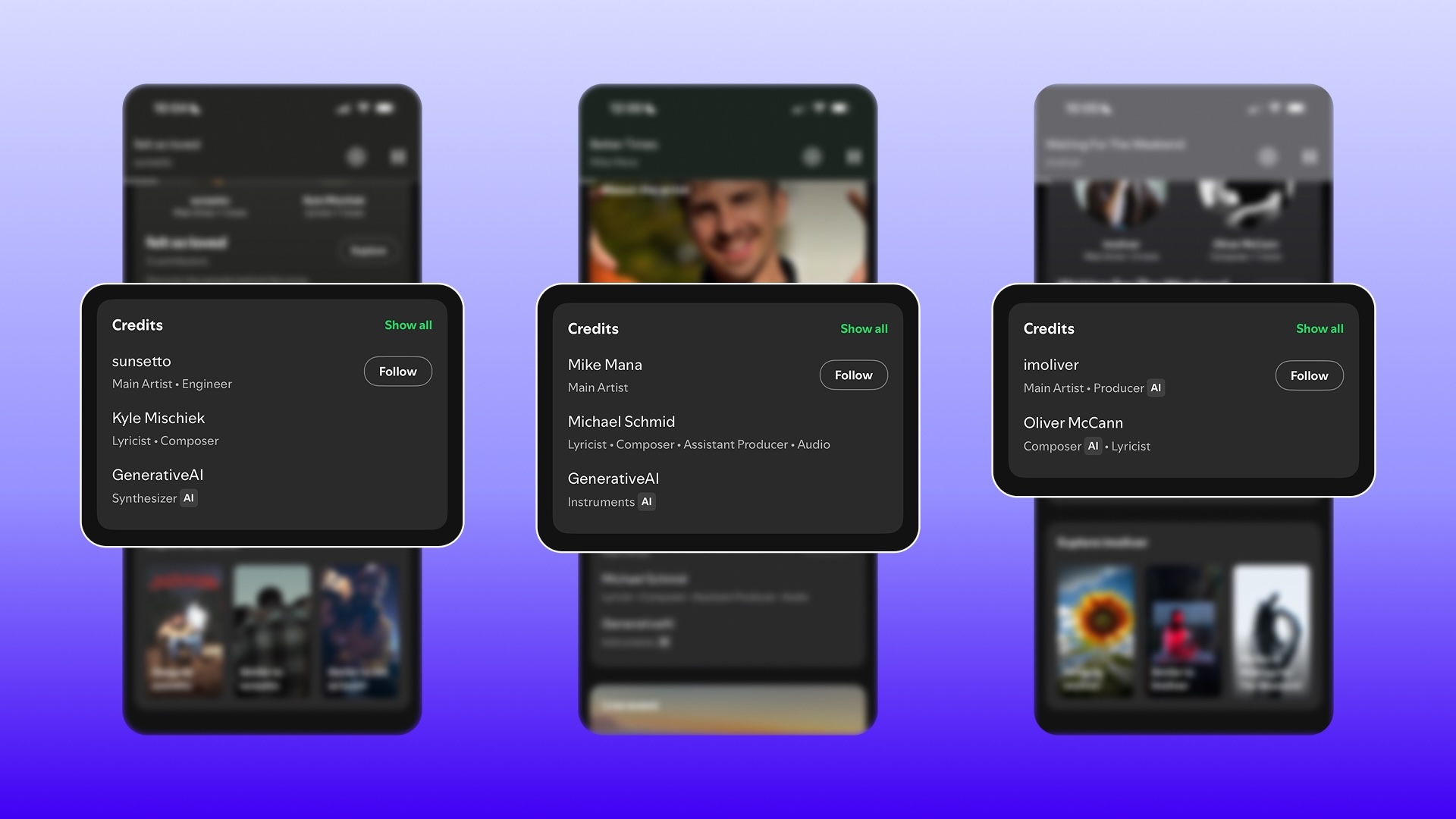
Photo Credit: Spotify Spotting AI-generated content online is getting easier as the web is filling up with machine-made material, from music and avatars to bland, formulaic posts. In response, platforms are starting to add warning labels and detection features to give users a heads-up on AI-produced content, according to New York Magazine. The scoop As AI is swamping the internet, a growing group of platforms are experimenting with disclosure methods. TikTok, YouTube, and Meta mark at least some AI-made material; Substack works with Pangram so writers can check whether text appears to have used AI; and Spotify says it plans to identify music generated by AI. The push comes as user frustration with spammy, assembly-line content continues to rise. Spotify said, “Listeners have been clear in telling us that they don’t like seeing an artist profile that seems human, only to find out that the persona is AI-generated.” Part of that pressure has come from the European Union, which requires chatbot and generative AI providers to alert users when they are interacting with AI and to tag outputs in a machine-readable format so they can be recognized as artificial or altered. Why is this important? Only a few years into
Read More

Tuesday, October 27, 2026

Tuesday, October 27, 2026
Spotify, Substack, and LinkedIn roll out warning labels as AI-generated media expands

ADVERTISEMENT
- Trending
- Comments
- Latest







We bring you the best news, updates, reviews, and events coverage surrounding the worlds top Social Network Companies.
