
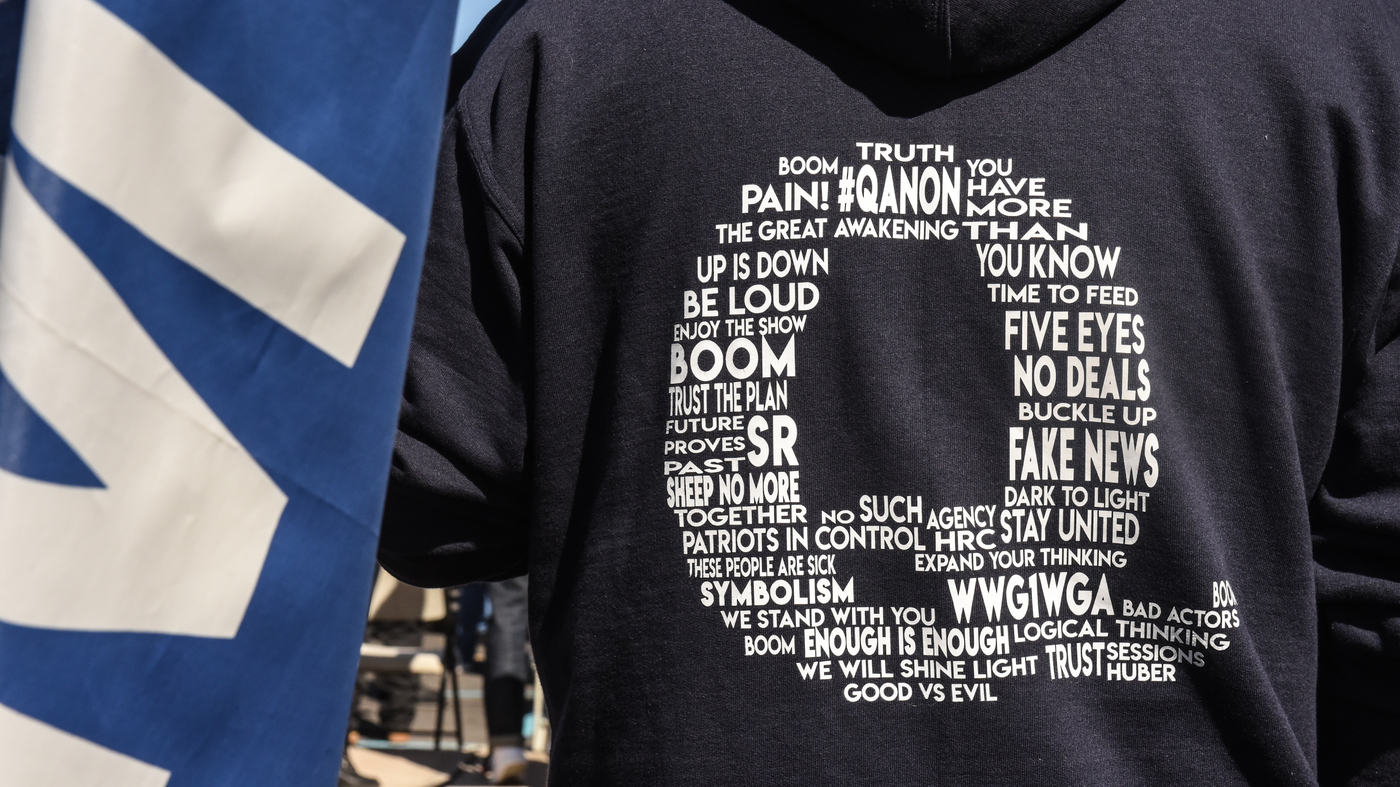
After social media platforms cracked down on the baseless QAnon conspiracy, adherents are scrambling to find other ways to communicate. Stephanie Keith/Getty Images hide caption toggle caption Stephanie Keith/Getty Images After social media platforms cracked down on the baseless QAnon conspiracy, adherents are scrambling to find other ways to communicate. Stephanie Keith/Getty Images January brought a one-two punch that should have knocked out the fantastical, false QAnon conspiracy theory. After the Jan. 6 attack on the U.S. Capitol, the social media platforms that had long allowed the falsehoods to spread like wildfire — namely Twitter, Facebook and YouTube — got more aggressive in cracking down on accounts promoting QAnon. Just two weeks later, Joe Biden was inaugurated president. That stunned those adherents who believed, among other things, that Donald Trump would stay in office for another term and that he would arrest and execute his political enemies. “There’s no one cohesive narrative that’s really emerged yet. And I pin that on [QAnon] not really having a leader right now,” said Mike Rothschild, a conspiracy-theory researcher who is writing a book about QAnon. The QAnon universe has two stars. There’s Q, the mysterious figure whose cryptic, evidence-free posts on anonymous online…
Read More

Tuesday, August 25, 2026

Tuesday, August 25, 2026
Unwelcome On Facebook, Twitter, QAnon Followers Flock To Fringe Sites

ADVERTISEMENT
- Trending
- Comments
- Latest







We bring you the best news, updates, reviews, and events coverage surrounding the worlds top Social Network Companies.
