
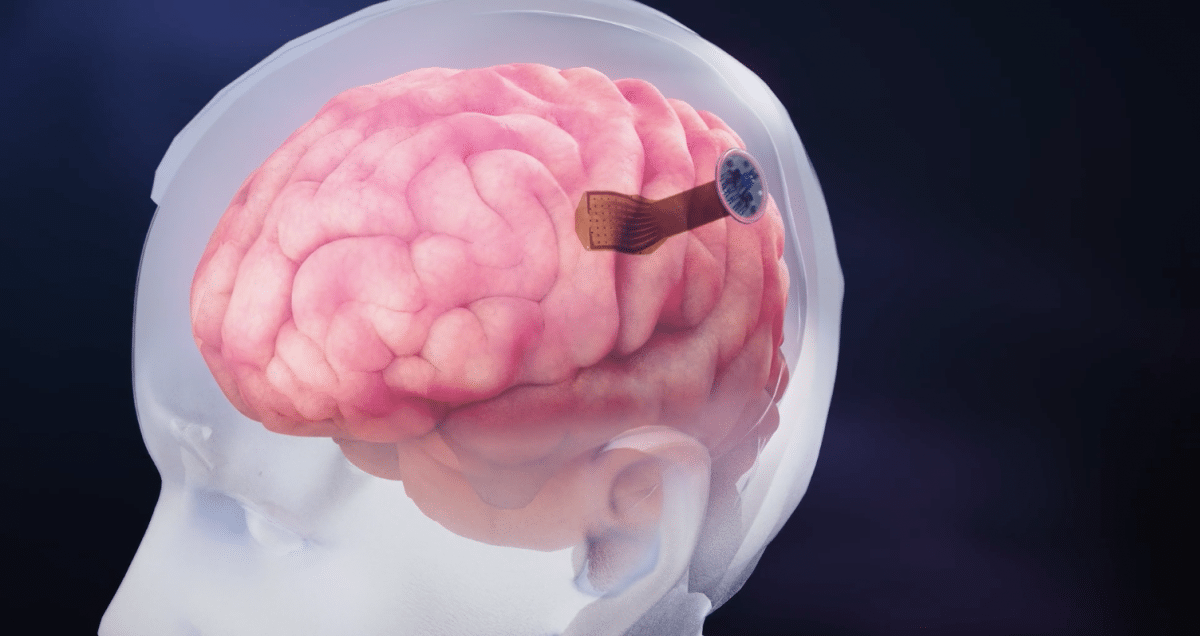
Implants that use tiny electrodes to read or specifically stimulate the firing of neurons in the brain could improve the quality of life for many people in the future. The vision: Those who have neurological limitations, are paralyzed or blind should be able to walk, communicate or see again thanks to such brain-computer interfaces (BCI). There are already first reports of success. Advertisement However, implanted BCIs in humans have so far only been used in a few cases, usually in the context of scientific studies. After all, surgical interventions in the head harbor risks – and the implants that have been used up to now are stuck in the brain tissue like tiny nail boards. They can cause inflammation and scars, which also affects the electrical contacts and thus the performance of the implants. The start-up Precision Neuroscience from New York wants to remedy the situation and has developed an implant that is said to be flexible and gentler on the brain. According to the company, it can also be implanted in a minimally invasive manner and can map the brain waves several hundred times more precisely than the previous versions. It was recently tested on humans for the first
Read More

Sunday, September 13, 2026

Sunday, September 13, 2026
New brain implant is five times thinner than a human hair – Breaking Latest News

ADVERTISEMENT
- Trending
- Comments
- Latest






We bring you the best news, updates, reviews, and events coverage surrounding the worlds top Social Network Companies.
