
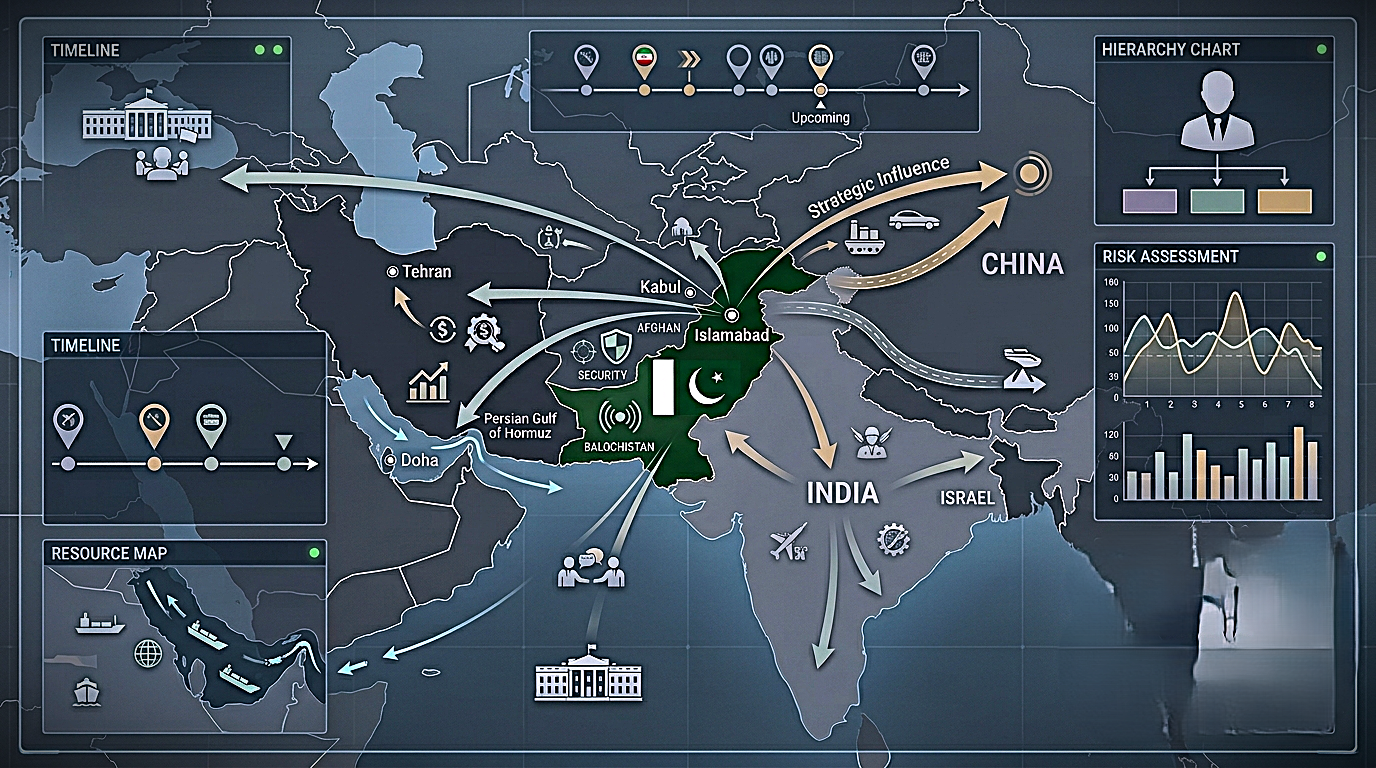
Executive Summary Pakistan is gradually expanding its role as a mediator between the United States government and its principal rivals. From the Doha talks with the Taliban to the upcoming summits in Islamabad involving Iranian interests, its posture is acquiring increasing credibility as a functional intermediary. This report evaluates both the strategic benefits of Islamabad’s diplomatic pivot and the risks associated with this trajectory, given Pakistan’s precarious internal security situation and the delicate power balance in its relations with Washington and Tehran. Key Points Pakistan’s diplomatic expansion may represent a refined strategy to counterbalance Indian influence in South Asia. Ongoing hostilities along the Afghan border and a volatile domestic landscape raise questions regarding Islamabad’s long-term reliability as a stable mediator. Failure to maintain a balanced, non-partisan policy risks Islamabad alienating its neighbours and compromising its strategic partnership with the United States. Background Information On Sunday, 29 March 2026, Islamabad became the venue for two-day consultations among the foreign ministers of Turkey, Saudi Arabia, Egypt, and Pakistan. Pakistan’s capital city is now a key focal point for an expanding diplomatic drive, which officials deem the most coordinated regional effort thus far to promote direct talks between the United States and Iran.
Read More

Wednesday, September 9, 2026

Wednesday, September 9, 2026
Pakistan Role in the International Arena as Mediator – SpecialEurasia

ADVERTISEMENT
- Trending
- Comments
- Latest







We bring you the best news, updates, reviews, and events coverage surrounding the worlds top Social Network Companies.
