
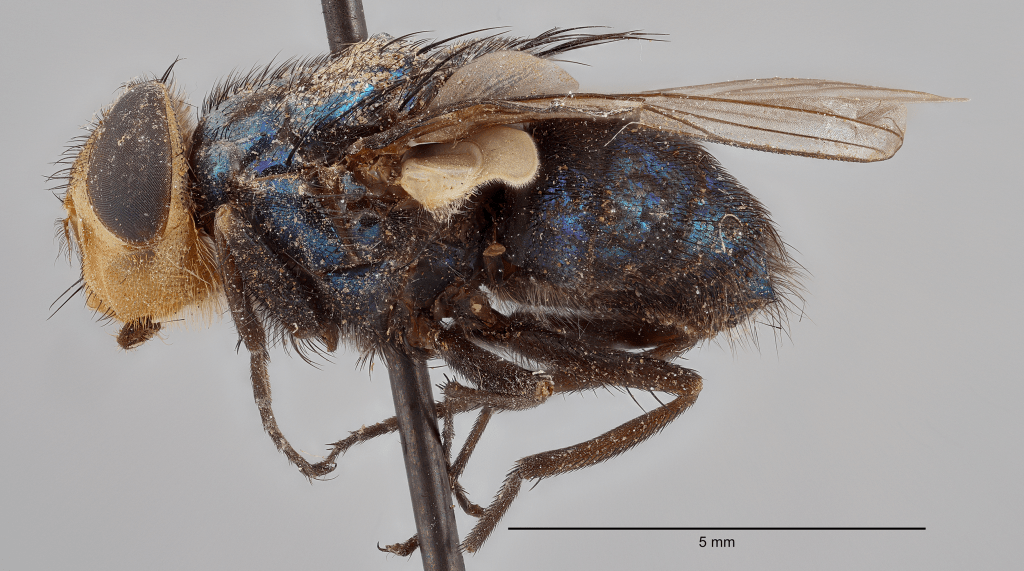
As New World screwworm flies (Cochliomyia hominivorax, male pinned specimen shown here) spread northward again, researchers say two versions of a trap originally designed to catch tsetse flies in Africa are also effective for catching screwworm flies. The traps also preserve caught specimens better than traditional sticky traps, offering a promising boost to early-warning surveillance efforts. (Photo by Paul Langlois, USDA APHIS ITP, Bugwood.org) By Andrew Porterfield Andrew Porterfield Beginning in the 1960s, the New World screwworm fly (Cochliomyia hominivorax) was eradicated in North America, first in the U.S. and then progressively southward to the Darien Gap in southern Panama by the early 2000s. It then remained endemic but controlled in every country in South America except Chile. However, recent outbreaks have been recorded across central America and Mexico, and in June 2026 the fly was identified in Texas and New Mexico. Screwworm fly infestations, which involve the flies laying eggs in wounds of warm-blooded animals (usually livestock) and the subsequent flesh-eating activity of the larvae, could cost cattle producers $4.3 billion a year, and $10.6 billion in total economic losses, in the United States. Pesticides have not been overly effective against the fly, and containment has been achieved by
Read More

Wednesday, July 22, 2026

Wednesday, July 22, 2026
Study Validates More Trap Options to Detect New World Screwworm Flies

ADVERTISEMENT
- Trending
- Comments
- Latest







We bring you the best news, updates, reviews, and events coverage surrounding the worlds top Social Network Companies.
