
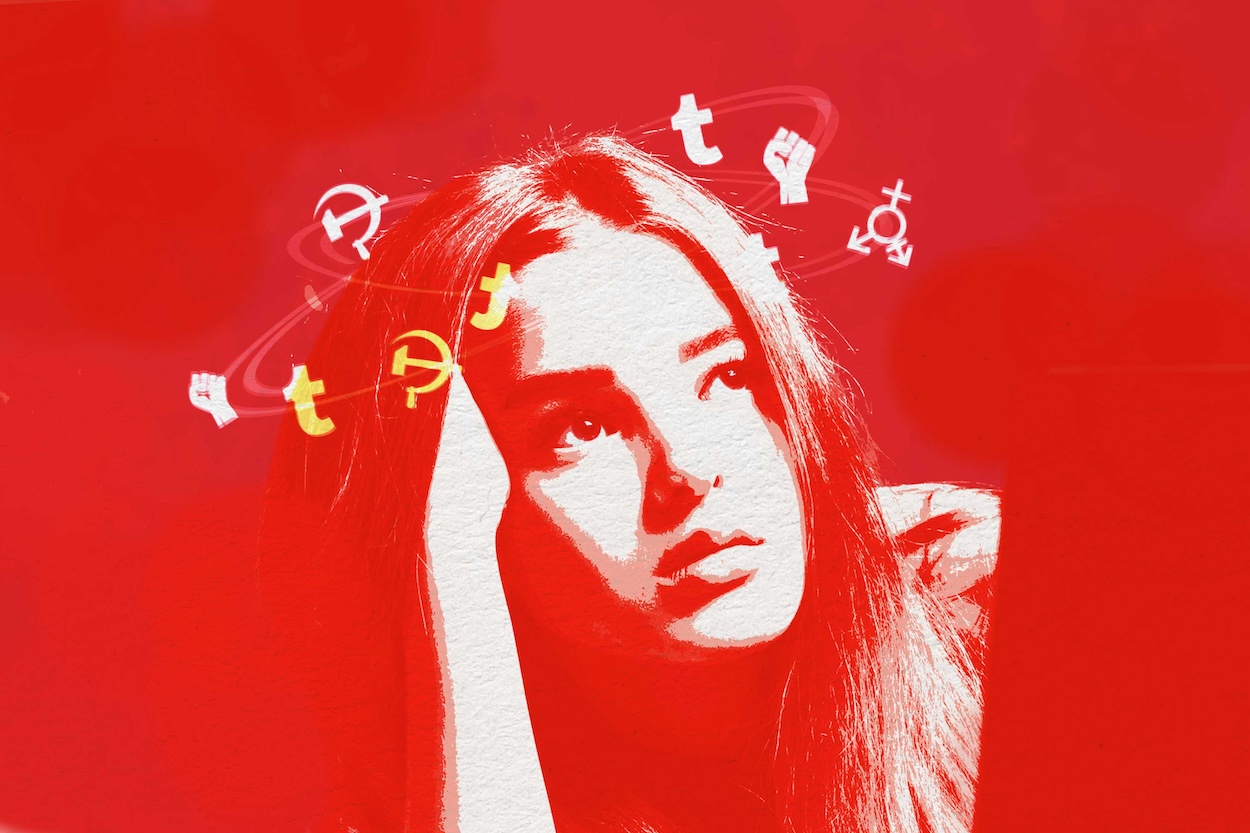
For the first half of the 2010s, any teenage girl in her room had a chance of amassing more political influence than a junior government advisor. She could define political terms and concepts, blacklist undesirable elements and argue for a different kind of society. Thousands, sometimes tens of thousands, of other teenage girls would be following her, reading and engaging. These were the days of Tumblr, a youth blogging website that functioned like a dysfunctional think tank. I first found out about Tumblr in 2012, when I was in Year 7 – the British equivalent of sixth grade; a girl in my year group started a blog about her depression and anxiety and linked it from her public Facebook. I wanted in on her mental anguish – the posts she shared would ring safeguarding alarm bells today, but they seemed impossibly grown-up at the time. At my all-girls school, having a Tumblr blog was a smug in-group identifier, signifying taste, depth and intelligence: if you already struggled making friends it gave you a leg-up over your happy, popular classmates, who mostly just logged onto the internet to post on each other’s Facebook walls. “You’re on Tumblr,” as one anonymous blogger
Read More

Friday, August 14, 2026

Friday, August 14, 2026
‘Woke’ was invented by angry schoolgirls on Tumblr – The Spectator World

ADVERTISEMENT
- Trending
- Comments
- Latest






We bring you the best news, updates, reviews, and events coverage surrounding the worlds top Social Network Companies.
