
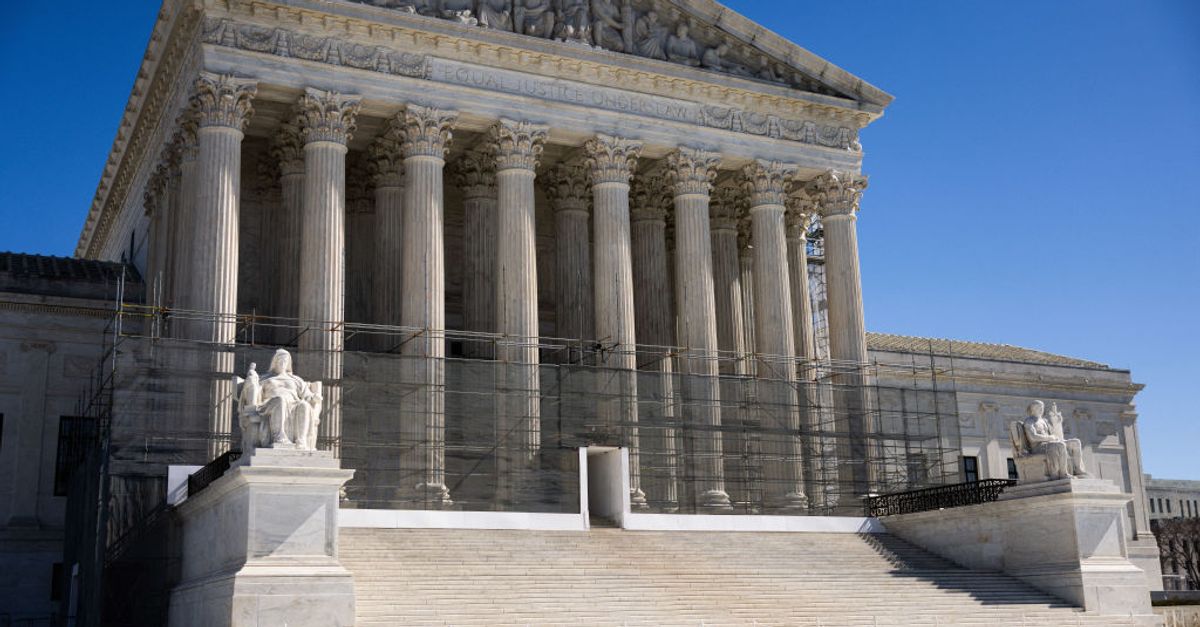
The Supreme Court on Thursday ruled in Abouammo v. United States that federal prosecutors can try a defendant only in the district where his crime was committed, not where its “contemplated effects” were felt. Specifically, in a unanimous decision by Justice Elena Kagan, the justices rejected a federal appeals court’s conclusion that the intent requirement in 18 U.S.C. § 1519 – which criminalizes falsifying documents in a federal investigation – allows the government to prosecute the defendant where such an investigation is located. Ahmad Abouammo was convicted of violating Section 1519 by creating a fake invoice on his computer in Seattle and emailing it to FBI agents. From 2013 to 2015, Abouammo worked at Twitter’s San Francisco headquarters, where his role gave him access to a tool that could pull users’ private, identifying data. Prosecutors said he used that access to find information about Saudi dissidents and pass it along to a high-level official in the Saudi royal court. In return, Abouammo received a luxury watch along with three wire transfers of $100,000 each as “consulting” income. A humanitarian worker for the Red Cross who tweeted satire “critical of the Saudi government” had his information disclosed and was apparently “detained in Saudi Arabia due to
Read More

Friday, October 23, 2026

Friday, October 23, 2026
Court unanimously sides with defendant in criminal venue dispute over where a crime occurs

ADVERTISEMENT
- Trending
- Comments
- Latest







We bring you the best news, updates, reviews, and events coverage surrounding the worlds top Social Network Companies.
