
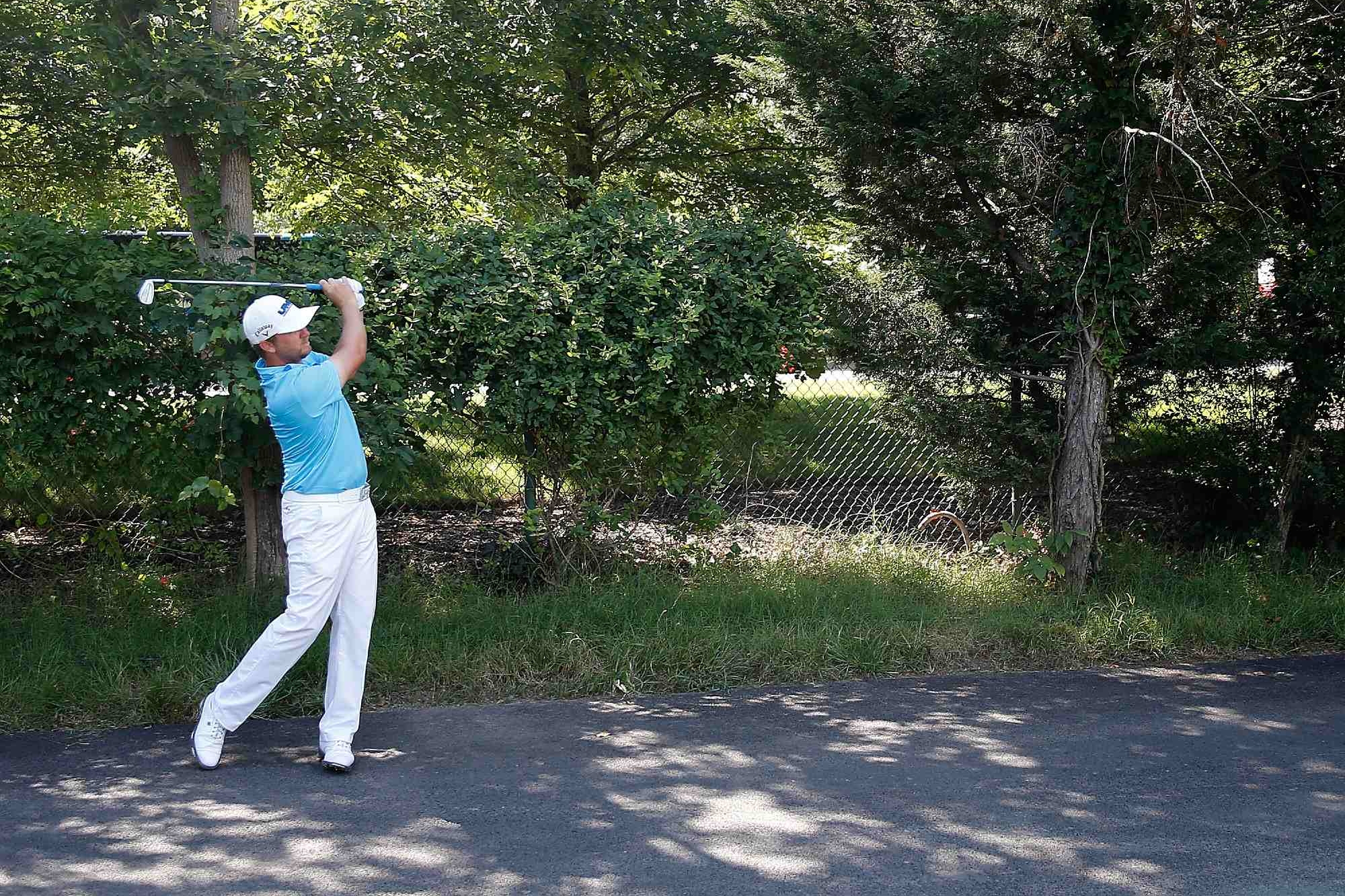
Taking relief from one just brings you into contact with another. So what happens? Steve Carroll explains what the Rules of Golf say about abnormal course conditions The 11th hole at my home club, York Golf Club, is a short par 3 with a twist. While the green is inside the course boundaries, the tee is on common land and a fence separates the two properties. During the play of that hole, the fence is an immovable obstruction. Players can take relief from it under Rule 16.1b if it touches, is on it, or if it physically interferes with their area of intended stance or swing. Near the fence, on the course side, is a path – also an immovable obstruction. The two of them are so close, in fact, that in some circumstances taking relief from one will mean being interfered by the other. What happens now? Let’s get stuck in… Rules of Golf explained: Taking relief from two immovable obstructions Keep two things in mind when dealing with this. The first is you need to find your nearest point of complete relief from the condition where your ball currently lies, and the second is that you must treat
Read More

Sunday, October 4, 2026

Sunday, October 4, 2026
Immovable obstructions: Here's what the Rules of Golf say

ADVERTISEMENT
- Trending
- Comments
- Latest







We bring you the best news, updates, reviews, and events coverage surrounding the worlds top Social Network Companies.
