
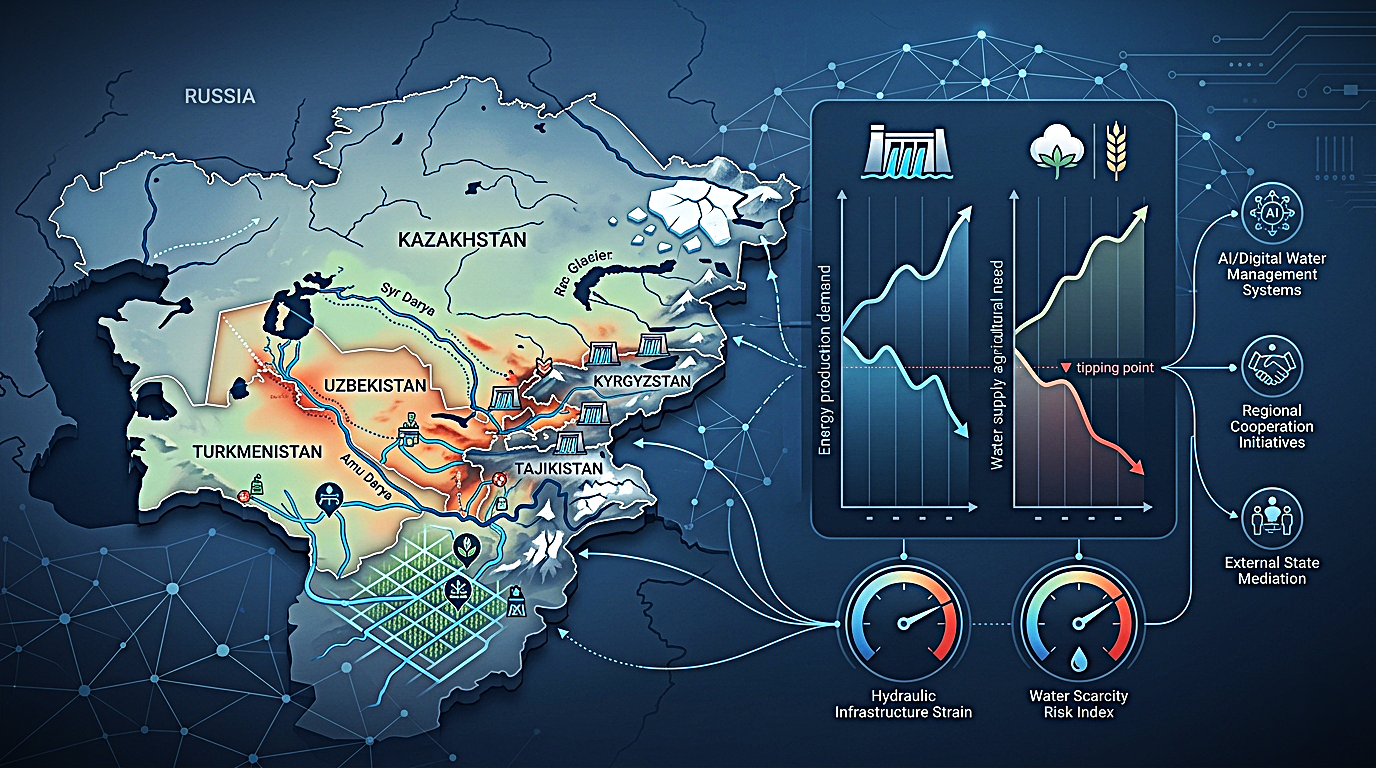
Executive Summary This report scrutinises the results of Tashkent Water Week 2026, during which representatives from Central Asia deliberated on the region’s water resource management challenges. Additionally, it underscores how Russia’s role in Central Asian water resource management equips Moscow with leverage to augment its influence on indigenous administrations, setting this against the backdrop of Western and Chinese competition. Key Takeaways Regional stakeholders met at Tashkent Water Week 2026 to discuss the rapid melting of glaciers, as Tajikistan announced the disappearance of over 1,000 of them. Regional stability is contingent upon the reconciliation of the “energy-agriculture” nexus, balancing the upstream hydroelectric demands of Tajikistan and Kyrgyzstan against the downstream irrigation needs of Kazakhstan, Uzbekistan, and Turkmenistan. The Russian Federation is positioning itself as a pivotal mediator and technological provider, utilising Artificial Intelligence (AI) and digital water management as geopolitical leverage to maintain regional influence. A capital-intensive investment strategy is being deployed, with Uzbekistan alone mobilising over 29 trillion sum and 1.5 billion USD in foreign investment to modernise failing hydraulic infrastructure. Information Context Evidence from Tashkent Water Week 2026 demonstrates that the regional hydrologic landscape is presently facing intense stress from human actions and climate shifts. The Tajik Minister of
Read More

Saturday, September 26, 2026

Saturday, September 26, 2026
Regional Water Security and Hydro-political Stability in Central Asia – SpecialEurasia

ADVERTISEMENT
- Trending
- Comments
- Latest






We bring you the best news, updates, reviews, and events coverage surrounding the worlds top Social Network Companies.
