
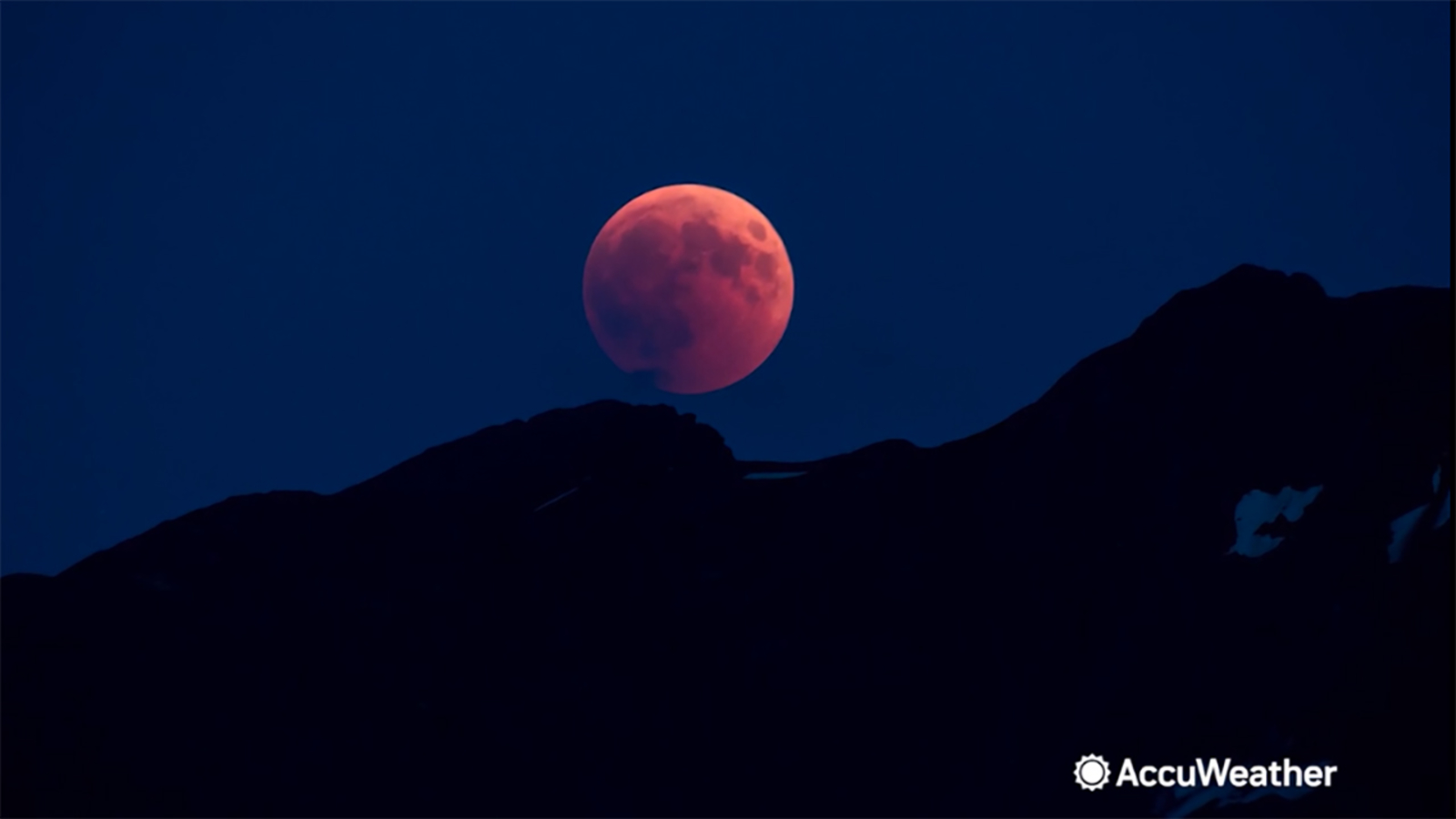
The night sky has several treats in store for 2022: Expect lunar eclipses, a planetary alignment and meteor showers!The new year brings not one, but two total lunar eclipses — the first on the night of May 15-16 and the last on Nov. 8, according to AccuWeather.The May total lunar eclipse will be visible throughout the entire contiguous U.S., weather permitting of course. Unfortunately for West Coasters, the eclipse will only be visible briefly.The Western U.S., however, has an advantage for the November lunar eclipse, as the moon will set just before the height of the eclipse on the East Coast.Lunar eclipses happen when a full moon enters the Earth’s shadow, said Andrew Fazekas, the “Night Sky Guy” and science columnist with National Geographic. This makes the moon appear orange or red.”This is when [the moon] turns that eerie orangey-red color. All the sunsets and sunrises around the Earth are being imparted at the same time as the thin veneer of our atmosphere funnels that light [the sun behind us] onto the surface of the moon,” he said.North Americans may not have the chance to view a total lunar eclipse from home until 2025, according to AccuWeather.On the morning of…
Read More

Sunday, October 18, 2026

Sunday, October 18, 2026
Top 2022 astronomy events: When to see 2 total lunar eclipses, 6 planets align | Full moon …

ADVERTISEMENT
- Trending
- Comments
- Latest






We bring you the best news, updates, reviews, and events coverage surrounding the worlds top Social Network Companies.
