
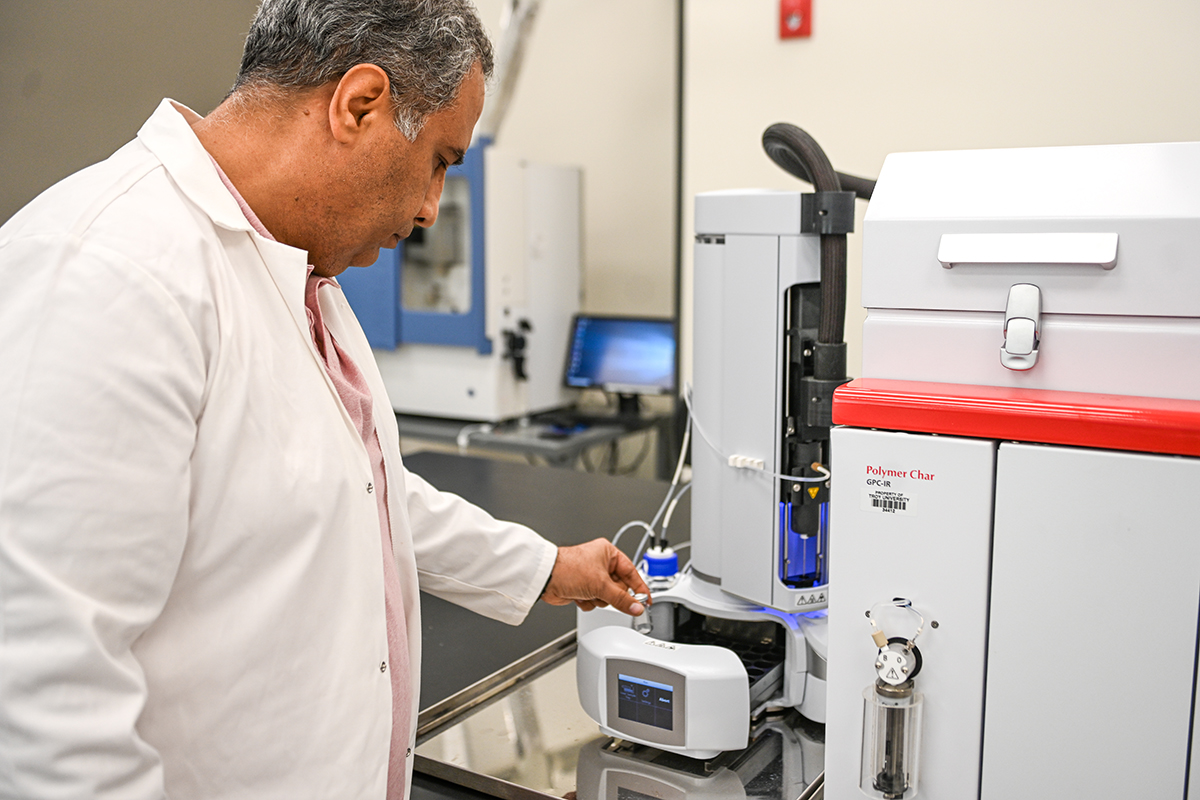
Troy University researcher Dr. Aboulfaz Barati has received an approximately $249,000 grant from the National Science Foundation to explore how materials recovered from waste can be redesigned to help plants survive drought. The project, titled “Architected Tolerant Superabsorbent Platforms Derived from Heterogeneous Waste Streams for Water-Resilient Seedling Establishment,” aims to not only show that a recycled material can absorb water, but to understand how the internal structures control the ability to store, transport and release water under realistic conditions like soil pressure, variable water availability and dissolved salts. “Many disposable products contain materials that are designed to absorb and retain large amounts of water. After use, these materials typically become waste,” Barati said. “The project asks a simple question: can we recover these materials from waste and redesign them into engineered structures that store water and release it where plants need it?” Water availability is a significant challenge for agriculture, particularly during seedling establishment when young plants are vulnerable to drought. At the same time, large quantities of potentially useful polymer and fiber materials are discarded as waste. Barati’s research aims to connect those two challenges by exploring whether materials that would otherwise enter the waste stream can instead be developed
Read More

Thursday, October 1, 2026

Thursday, October 1, 2026
TROY researcher awarded $249K grant to develop drought-resilient materials from waste

ADVERTISEMENT
- Trending
- Comments
- Latest





We bring you the best news, updates, reviews, and events coverage surrounding the worlds top Social Network Companies.
