
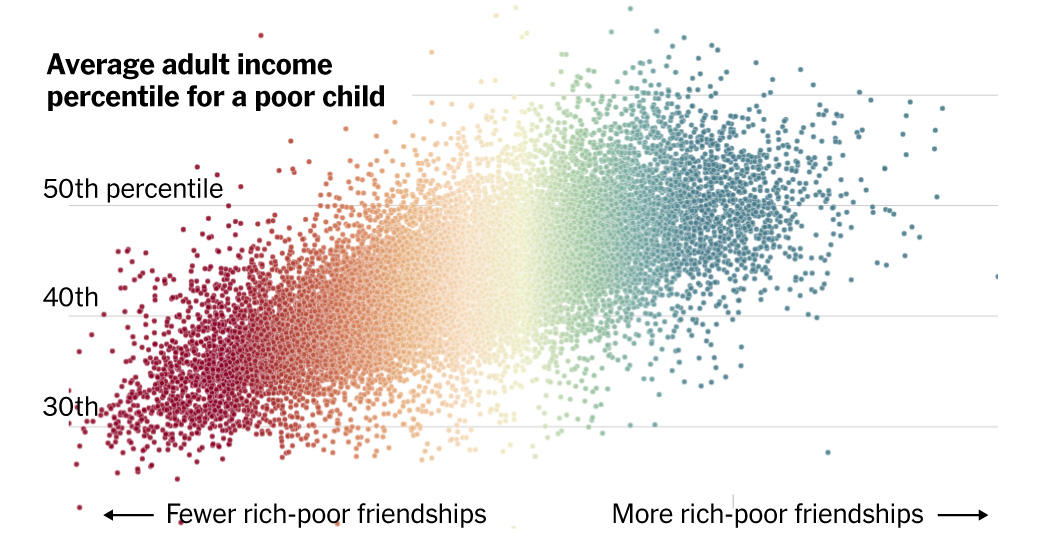
Jimarielle Bowie at her alma mater, Angelo Rodriguez High School, in Fairfield, Calif. A lawyer, she credits some of her success to the friendships she made in high school. Marissa Leshnov for The New York Times Over the last four decades, the financial circumstances into which children have been born have increasingly determined where they have ended up as adults. But an expansive new study, based on billions of social media connections, has uncovered a powerful exception to that pattern that helps explain why certain places offer a path out of poverty. For poor children, living in an area where people have more friendships that cut across class lines significantly increases how much they earn in adulthood, the new research found. The study, published Monday in Nature, analyzed the Facebook friendships of 72 million people, amounting to 84 percent of U.S. adults aged 25 to 44. Previously, it was clear that some neighborhoods were much better than others at removing barriers to climbing the income ladder, but it wasn’t clear why. The new analysis — the biggest of its kind — found the degree to which the rich and poor were connected explained why a neighborhood’s children did better later…
Read More

Saturday, October 31, 2026

Saturday, October 31, 2026
Vast New Study Shows a Key to Reducing Poverty: More Friendships Between Rich and Poor

ADVERTISEMENT
- Trending
- Comments
- Latest






We bring you the best news, updates, reviews, and events coverage surrounding the worlds top Social Network Companies.
