
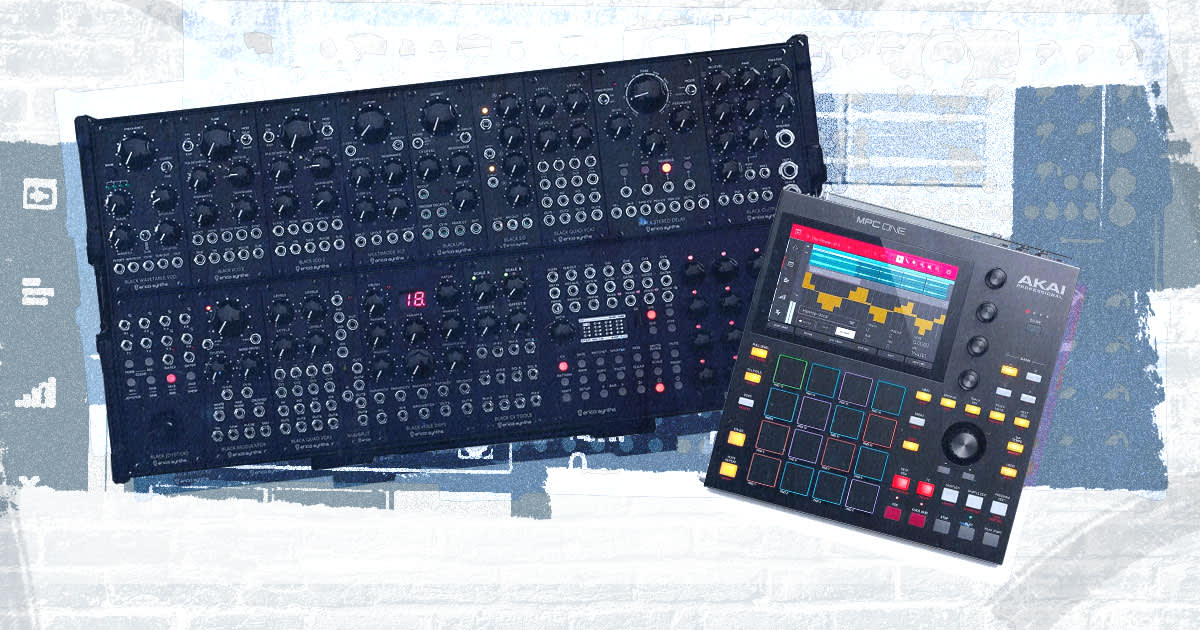
Hip-hop music—with its historical emphasis on reshaping and recontextualizing sound through sampling, synthesis, and signal processing—would seem like a natural home for modular experimentation if it weren’t for a wealth of socioeconomic impediments that keep producers from starting down the road to building their own systems. When Clive “DJ Kool Herc” Campbell began to use two turntables, a mixer and two identical copies of a record to isolate and repeat the drum breaks from funk and rock records in the early 1970s, he helped set a precedent that defines hip-hop to this day. To put it simply, it’s a culture that encourages the use of technology in ways that run counter to their original purpose. In the hands of the hip-hop generation, turntables, drum machines and digital samplers are used to create new, complex musical compositions. Now, nearly 50 years removed from Herc’s initial landmark experiment, this practice of repurposing and recontextualizing is still a core characteristic of the music and the culture that produces it. Back in 2015, I randomly came across the then-infamous, now-mostly forgotten Tumblr page titled “eurorackdudeswithbeards”. Scrolling through the page, I was met with images of serious-looking white male musicians and their expensive modular synth…
Read More

Saturday, October 31, 2026

Saturday, October 31, 2026
Where Modular Synths and Hip-Hop Meet | Reverb News

ADVERTISEMENT
- Trending
- Comments
- Latest





We bring you the best news, updates, reviews, and events coverage surrounding the worlds top Social Network Companies.
